


Melinda Young leads the Lac du Flambeau Tribe’s Natural Resources Department: Preserving the Natural Resources
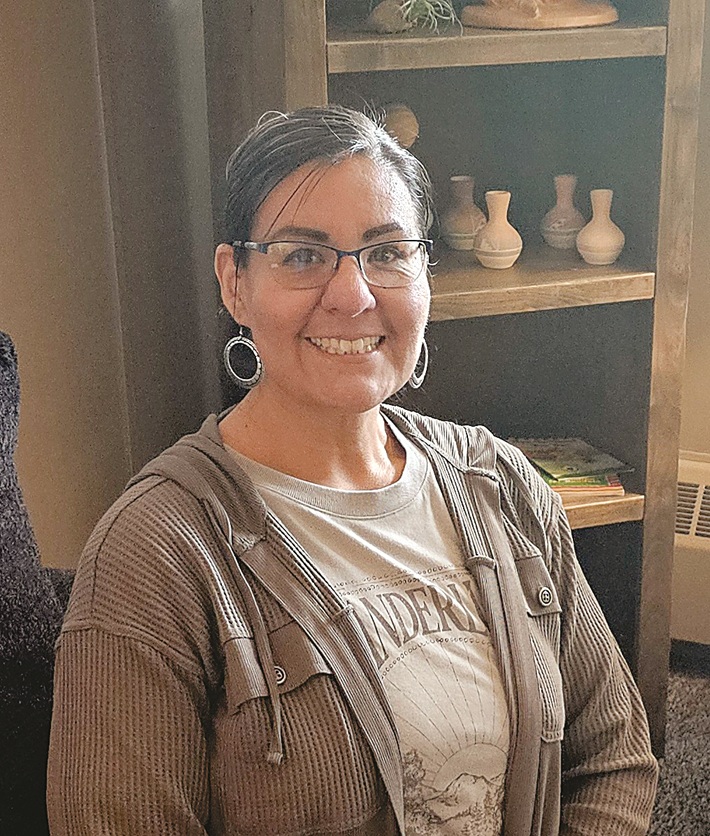
Melinda Young
by Jonathan Gramling
For Melinda Young, the director of the Lac du Flambeau Tribe’s natural resources department, her life has come full circle in a way. When she went off to college, she planned to be an accountant. But then she took a job working with the tribe’s tribal historic preservation office 25 years ago and fopr the most part, has worked in the effort ever since.
In some ways, historic preservation involved a lot of areas.
“At that time, the way the tribe was set up, we fell under the umbrella of historic preservation,” Young said. “So for a good portion of my career at historic preservation, we worked on things collaboratively. It was always the mind-set that natural resources are cultural resources and so our departments had worked together to protect traditional gathering spots, which were often times seen as a natural resource like a maple sugar stand or wild rice paddies. Wild rice is incredibly important to my community and the Ojibwe people. That is why we are in this area. The prophecies had told us we had to migrate from the East to the West to where the food grew on water, which was wild rice. Through my 20 years with historic preservation, that was where a lot of my knowledge and experience was honed, working simultaneously with the department.
After a brief period away from the tribe, Young came back in December 2024 to serve as the interim director of the natural resources department and became the permanent director last summer.
Managing the reservation;s natural resources is not as simple as it might appear. After all, the tribe owns the reservation and establishes its laws. But it is much more complex than that.
“Within our 12 by 12 — which is how we describe our reservation — boundaries, there is a lot of responsibility,” Young said. “We’re trying to preserve the resources that we have available for our tribal members, right here in this reservation that was reserved for our people. I don’t want to say this is all that we have. But this is what was meant for us. And then we have the whole ceded territory where we are keeping an eye on resources in the ceded territories because we
have that right to hunt, fish and gather within those lands. We have to make sure that those resources are also available for our tribal members. And more than that, we are keeping an eye on things that are happening nationwide because actions that take place out West or down South or whatever can set a precedent that can impact policy that could impact us here in the Northwoods. It can be a daunting task. And of course I don’t do that by myself. I have a team of people. And each one of us is keeping their ear to the ground in our respective areas, whether it is water resources, wildlife habitat or environmental impact and things of that nature. I think it all comes together. It’s not just what we are doing here in the Lac du Flambeau reservation. It’s what we are doing nationwide.”
As an administrative agency, Natural resources must also be in sync with the political decision-making on the reservation.
“Our tribal council can change almost 50 percent every year because we have a 12-member council,” Young said. “One year, it will be the president, vice-president and four council embers. The next year, it’s the secretary, treasurer and the other four council members. So there is the potential to have a completely new council every other year. I think we’ve had leadership over the last several years that has been pretty consistent, so there hasn’t been too much instability on the tribal side. We do have some consistent leaders who have assisted and lobbied for our efforts and fought for the work that we do here on Lac du Flambeau. And then we have some new members. We had a major shift this year. We had four new council members. They have new ideas and new experiences that they bring will enhance, I feel, the leadership that remains there and has been there for the last few years. I like that. It’s okay to have a refresh. What we do here — what I will call on the technical level — in our department is continue to educate and continue to provide information. And we continue to be forthcoming and approaching leadership and educating them on the needs that we have and the work that we are doing so that we continue to have their support, whether they are new or existing members of our tribal leadership.”
Another political force that the department must interface with is the WI DNR.
“They too have to balance the needs, their responsibilities to taxpayers and those visitors who recreate in Wisconsin,” Young said. “But also to have that government-government relationship with the tribes in Wisconsin. There are 11 federally-recognized tribes in Wisconsin. And each of them have their own priories and needs. Some of us may have various similar needs and priorities. But also even then, they can vary. We have six different tribes and all six of us can be seen as one. But our needs and priorities can also be different. Nevertheless, we come together and try to support one another in that message in working with the state, specifically the DNR. We just had tribal consultation with Secretary Hyun and her staff on October 15th. I traveled with a couple of my staff and President Johnson and a staff attorney to that consultation. And so Secretary Hyun was able to hear from the tribes that were present what the needs are and the area that we need WI DNR to focus on and support us too. We’ll see what becomes of that. I think it was a good meeting. I’m hopeful.”
Tribal Natural Resources also has to work with the municipalities and county government to maintain the lakes and watersheds, especially since the watershed may be outside the tribal boundaries, but have a direct impact on tribal waters and the wild rice beds and wildlife within them. But that cooperation doesn’t automatically happen.
“The folks who facilitate that process for Vilas County are reviewing the information the property owner is providing for whatever project be it a shoreline development, a boathouse or building a house,” Young said. “They are reviewing those projects from whatever is being provided to them and then they are making a decision and a permit is issued. An application was applied for one day and a permit approved a few days later. I only knew about it because I was watching a cement truck go up and down the neighborhood street. I was wondering what that was about. We looked into it. In days, this property owner was able to be pouring cement for their project. ‘My gosh, this is happening here.’ And we are starting to see this over and over again.”
And because the overall reservation area is a patchwork of different types of ownership, it can be quite difficult to stay on top of everything.
“We’re tasked with making sure we have healthy lakes and clean water,” Young said. “Our water quality standards, we oversee that. We have that federal authority. These projects can have an impact on the water quality and we’re not afforded an opportunity to review these projects. That’s on the Vilas County side. And the DNR is issuing permits for those types of projects as well that have an impact on water or wetlands. Again it’s a desktop review. And meanwhile, my staff is right here.”
The Lac du Flambeau have been setting up a system to allow every department to review projects within the reservation boundary so that they aren’t trying to comment on projects that are already being implemented and perhaps impact the construction process.
“The Lac du Flambeau Tribe has an application process that we have implemented since the year 2000 where projects within reservation boundaries that have an impact on the land, whether that is developing the highway or laying utility lines or a tribal member building a house or a cell tower going up, the agency that is doing the project would provide their plans to our land management department,” Young said. “And then the land management department uploads it into a system that is online and all of the departments that have review component within their responsibility has an opportunity to review that project, whether that is historical preservation or the planning department or natural resources department, our wild rice program, our habitat program, fish hatchery, environmental response, everyone has a chance to review that and they are able to provide their comments saying, ‘With this particular project, there are no concerns.’ If there is a permit requirement, through historical preservation or water quality standards, that information is then provided. That also provides the tribal department an opportunity to consult with the tribal member of non-member who is doing a shoreline development project. It allows us the opportunity to consult with them and say, ‘Hey, maybe this is not the best method to restore your shoreline. We have the expertise to provide you with additional information on how to do this in a way that is not as harmful. Maybe this would be a better support.’”
Melinda Young and the tribe’s natural resources department interfaces with a web of authorities and private and public parties to preserve the pristine nature of Lac de Flambeau lands for seven generations into the future. And in so doing, they preserve the natural resources for all of us to appreciate and enjoy.
