Julia Arata-Fratta is the City of Fitchburg’s First Latina Mayor: Right Person, Right Time (Part 2 of 2)
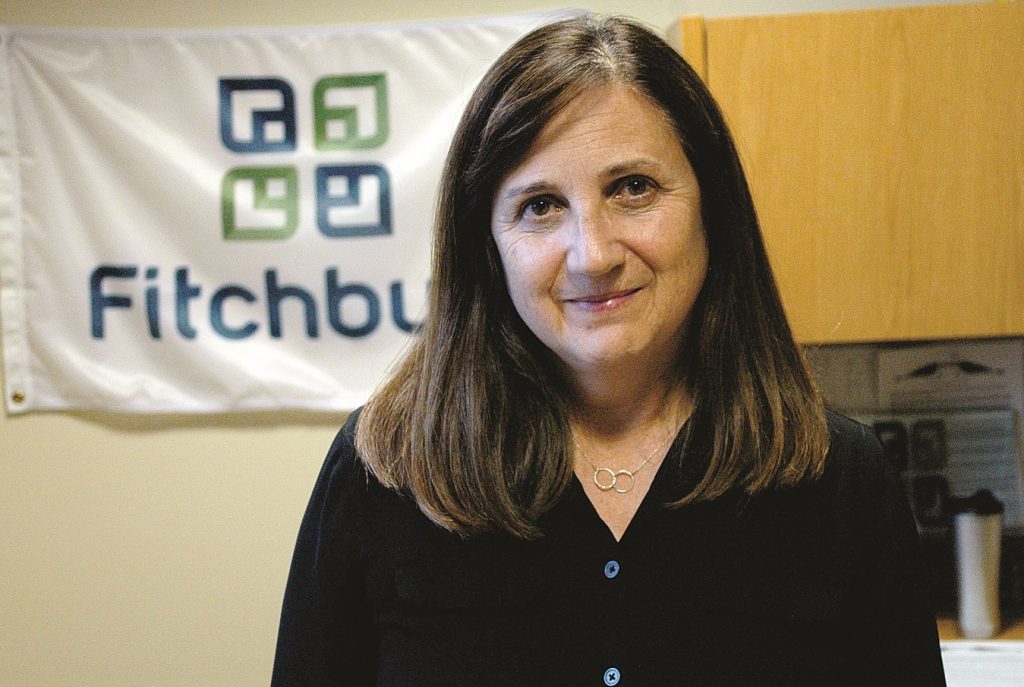
With her business background, Mayor Julia Arata-Fratta is the right person to lead the city of Fitchburg as it experiences rapid growth in its commercial and residential areas.
By Jonathan Gramling
Julia Arata-Fratta who was elected mayor of the city of Fitchburg in April 2023 — the first Latina elected to that position — has come a long ways to be elected to the position. Arata-Fratta was born and raised in Argentina and earned the equivalent of a business and accounting degree there before moving to Georgia to earn a master’s degree in business administration. She then followed her husband to the Madison area and settled in Fitchburg to raise their family while both pursued their professional careers. Arata-Fratta works at Wegner CPAs.
Arata-Fratta attributes two personal characteristics to why people voted her in.
“I think I was elected because I have shown the people of Fitchburg that I am very focused and I produce results,” Arata-Fratta observed. “I am very community-oriented. I raised my kids in this community. I sent my kids to a community school in my neighborhood. I had proven to the city of Fitchburg that I was capable of doing things. And I kept my word. I had my position on some issues and I wasn’t going to change it because a group of loud people were going to come and intimidate me. I was always looking for what was best for the city in general.”
While Fitchburg can be looked at as a rural/suburban community, it is very diverse in many ways. It ranges from the “brown belt” in the north where many of its African American and Latino residents live to the farmland in the south near Oregon that wants to retain its rural nature. There are a lot of diverse interests. And Arata-Fratta wanted that diversity to be reflected in all phases of city government.
“I would say that the beauty of Fitchburg is the diversity that makes us different from other communities,” Arata-Fratta said. “But also, we must be
aware of the needs in the community. There is the diversity of income. There is a huge socioeconomic gap when comparing neighborhoods. How can we balance that? I believe that if we invest in those areas, the whole city is going to elevate. But always, you have people who say, ‘Why are you investing in those areas? Why is there that enormous park on the northeast side?’ I say, ‘Why not.’ It’s hard to navigate. I think because I speak Spanish, we have a couple of initiatives that I want to continue doing to be more intentional in how we communicate with that community. And also with the African American community, I try to meet with the Black leaders who live in Fitchburg because I am not familiar with that community and I need to understand the needs. Former Mayor Frances Huntley-Cooper is one of my mentors because she knows how to navigate the community and understands the needs. I brought a lot of diversity to the committees and commissions through the appointments that I made. I was very intentional that we had diversity, not only in terms of race. I wanted to have young people. We needed people with different backgrounds and knowledge and different work life and from different neighborhoods. I didn’t want all of the people siting on the committees from the same neighborhood. I was very intentional in setting out to recruit people for the committees.”
It’s an exciting, yet challenging time for Fitchburg. It is experiencing the rapid growth that is fueled, in part, by the growth of its neighbors to the north and west.. While Fitchburg may be technically landlocked, it has large portions of the city that are underdeveloped and undeveloped.
“We are 34,000 people right now and we are growing by about 700-1,000 people per year,” Arata-Fratta said. “Epic is adding more buildings and they are going to hire 1,700 people. Where are they going to live? In Verona, Fitchburg and Madison. And so we need to be ready to absorb that growth too.”
An example of underdeveloped areas is the Fitch Hatchery corridor between the Beltline and Post Road.
“That area will be developed next year,” Arata-Fratta said. “A couple of years ago, we hired a consultant to do the vision for the Fish Hatchery Road corridor. We had a vision for the corridor and the city wanted to redevelop Fish Hatchery Road. So the city invested $28 million in that road. The idea was to bring the development. We see that the development is coming. It’s slow, but it is coming. You can see all of the new buildings. And in the pipeline, there are projects that are coming in 2024 in the area near the church. Also you need to understand that there are some pieces of land that the owners don’t want to sell. And we are hostage to that.”
Originally a hotel was going to go in the area where the old Stop and Go used to be.
“The idea was for a hotel to be built where the church is,” Arata-Fratta said. “But then at the last moment, one of the investors decided that it wasn’t attractive or whatever and then that project died. But we have other projects for that area coming next year. Some of them will be multi-family with retail on the first floor. It will be 5-6 stories tall. I think the developer is going to work with the church to share the parking.”
Most of the development will be happening in three areas. The first is called Uptown Fitchburg located near Hwy 14 and McCoy Road.
“Uptown Fitchburg is in a seven mile radius of 70 percent of the population in Dane County,” Arata-Fratta said. “The location is incredible. That area has grown a lot. There a couple of buildings coming up. It is growing.”
The other two growth areas in Fitchburg are in the southeast and southwest portions of the city.
“South of Lacy Road, we have a couple of new subdivisions — Fahey Fields and Highland Reserve — growing,” Arata-Fratta said. “They are single and multi-family homes. Also on Seminole and Lacy, we have another subdivision that is almost complete. Blackhawk Church is in that area. It’s a new subdivision, but it is already almost complete. For next year, we have a couple of projects. We are working on two new neighborhood plans, southeast and southwest. Those are the areas where the city is going to grow. One is primarily rural. Greenfield is an area where there is a neighborhood, but we are looking to add more parcels. It’s close to the interchange. The other, which is southwest, is Lacy Road and Fitchrona Road. That area is primarily agricultural.. Edgewood College is going to do its athletic field there. Edgewood purchased a parcel at Lacy Road and Seminole Highway, part of the Bill O’Brien farm. We created a new roundabout for that area. We are doing the redevelopment of Lacy Road to Fitchrona. It’s a new road. The idea is to promote development in that area. That is a Future Urban Development Area, what we call FUDA. It’s an area where the city can grow. And next year, we are planning to do a full revision of the comprehensive plan because we want to look at how the city is going to grow in the next 20 years.”
While growth is generally a positive things for a city, it also presents challenges. For instance, when the city of Fitchburg attached the former Town of Madison areas near Rimrock Road that included Deer Valley, the challenge was to make it an integral part of Fitchburg.
“How do we connect them,” Arata-Fratta said. “We have infrastructure. We have Madison Metro. The city is working with Madison Metro on how we are going to connect the east and the west. How can people come to the library and community center in City Center? That is a big challenge. It’s all about money. If we had the money, we could fix all of this.”
Fitchburg has been a small city for most of its history with an elected mayor and hired city manager running the city. But the rapid growth — and new demand for city services — is straining the city’s governmental infrastructure.
“We need to be prepared that as we grow, that growth is aligned with the growth of our resources in terms of staffing needs,” Arata-Fratta said. “Growth can also be a threat. You need the police and fire and more staffing within the city. We need more staffing with everything. We did a staffing study and it showed that we were 38 staff short. For the type of community that we are and looking at the next 5-10 years, we need to hire them. There are some departments here that haven’t added staff in 10 years. That is the challenge.”

Transportation is also a challenge, not only eat-west, but also north-south as Fitchburg development moves southward.
“We are also talking with Madison about the BRT,” Arata-Fratta said. “BRT is coming to Fitchburg in the next two years. We’re working with them on the North-South corridor. That is going to be another opportunity for community development and connecting people to the south side of the city.”
And like every other city in Dane County, Fitchburg has a lack of affordable housing where even some of its staff cannot afford to live there.
“The city of Fitchburg was able to close two successful Tax Incremental Finance districts in the last two years,” Arata-Fratta said. “We kept those districts open for a year so we could use the increment to create a housing fund. We have $3 million there that we are going to use on an initiative for housing. There are a lot of good things that are happening, but housing is another challenge because even some of our own employees can’t afford to live in Fitchburg. Our average home here right now is $426,000. We need to build more. We are even lower than the number of permits that we had before 2008 when the housing bubble happened. We have to do better with that.”
Fitchburg is experiencing challenges as it experiences rapid growth. Arata-Fratta, with her business acumen, belief in diversity and commitment to democratic ideals just may be the right person at the right time in Fitchburg’s history. Stay tuned.
Next Issue: Fitchburg’s Challenges and Opportunities