

The Naked Truth/Jamala Rogers

De-Flocking Must be Debunked
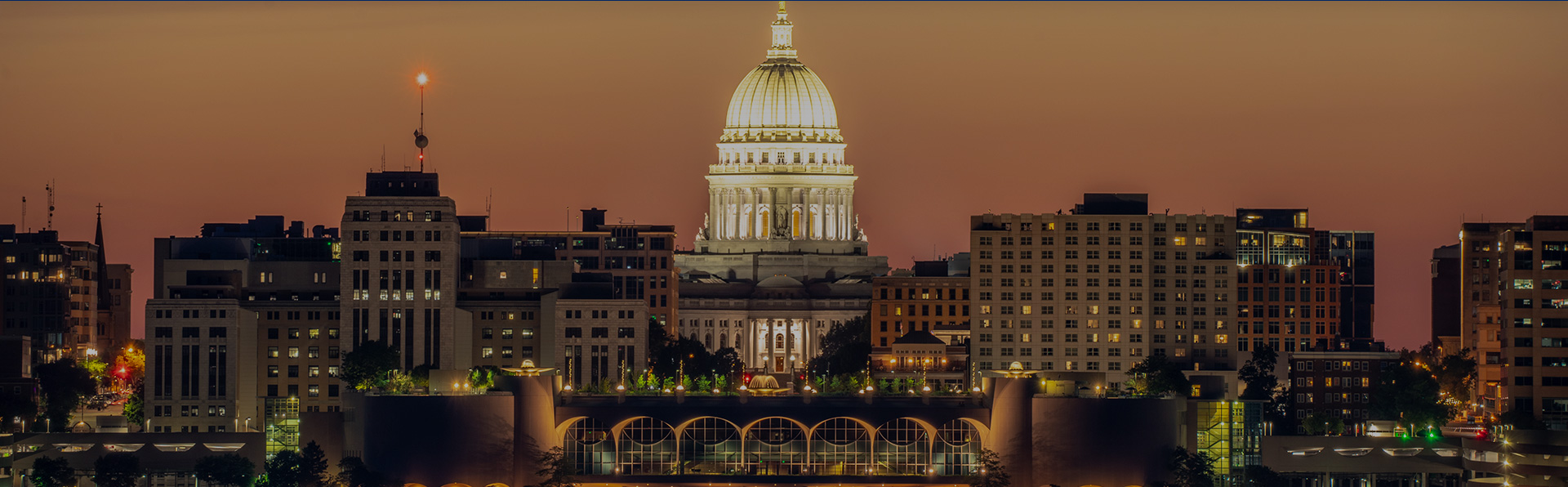
De-Flocking the campus was a small step. Back in the summer, the Police Department of the UW-Madison announced it would not be renewing the Flock Safety contract. By now, all Flock equipment should be deactivated and removed. But the university remains committed to campus surveillance — just not necessarily to Flock.
For whatever reason, right now, Flock is the main target of a vigorous national campaign against AI-powered license plate readers (LPRs). This myopic view doesn’t take into account that there are several other companies with the same mission. LPRs are part of a bigger labyrinth of surveillance networks in communities.
Every time I see a trusting person being interviewed on surveillance, I want to scream. They look straight into the TV camera and profess: I’m not doing anything illegal; bring on the security cameras. I shake my head because I know that it means another boost for Big Brother.
They believe they are defending public safety. They don't realize that privacy is not something we should surrender simply because we have nothing to hide. The cameras, databases, algorithms, and tracking systems being assembled today do not distinguish between the innocent and the guilty. They collect information first and leave it to someone else to decide how that information might eventually be used.

More skeptical observers have been warning about the potential for a police state in the United States for generations. In 1949, George Orwell published 1984, a dystopian novel shaped by his concerns about authoritarianism and totalitarianism. Orwell imagined a society in which an all-powerful government maintained control through pervasive surveillance and the constant presence of its leader. The novel quickly entered mainstream culture, and terms such as “Thought Police” and “Big Brother” have remained part of our political vocabulary ever since.
The U.S. government has pursued expanded surveillance and law-enforcement powers methodically, often invoking the threat posed by “outsiders” to construct a national-security narrative. That designation has not been limited to foreigners. American citizens deemed dangerous, subversive, or undesirable have also been cast as threats. Those narratives have helped shape public policy, government priorities, and enormous budgets.
The anti-Communist witch hunts associated with the House Un-American Activities Committee— which had important roots in Wisconsin — continued for decades. They overlapped with fears surrounding political unrest and uprisings in cities across the country, particularly following the assassination of Dr. Martin Luther King Jr. Then came the attacks of September 11, 2001, which dramatically accelerated the expansion of surveillance and law-enforcement authority.
So what does a police state look like? It can include mass surveillance, militarized domestic policing, suppression of a free press, repression of political dissent, abuse of executive and judicial powers, and the erosion or dissolution of civil liberties.
If those characteristics sound frighteningly familiar, they should. These are alarming times, particularly under the Trump administration and the forces surrounding MAGA. But this phenomenon did not begin with Trump. What has changed is the speed, scale, and brazenness with which some of these forces are now being pursued.
The warnings were never simply about one dictator or one government. It was about what happens when surveillance becomes normalized—when people surrender privacy incrementally because each intrusion seems reasonable, necessary, or harmless.
We cannot be distracted into believing that eliminating one company solves the problem. If we are serious about protecting privacy, democracy, and civil liberties, we must confront the entire surveillance infrastructure taking shape around us — and demand that those who build and operate it be subject to serious and continuous civilian oversight.
The looming police state will reveal that Big Brother didn't arrive all at once. We invited him in, one camera, one database, and one “public safety” argument at a time.