James Morgan Named Lead Organizer for MOSES: Beginning from Within
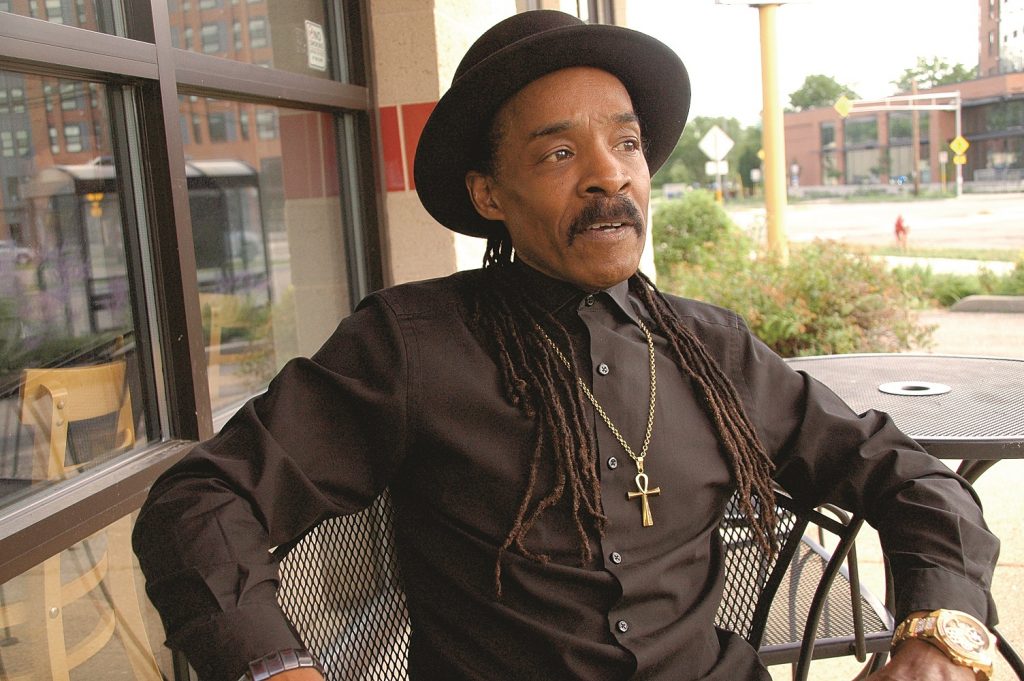
James Morgan has worked his way through a 55-year prison term, negative and low expectations, stereotypes of Black men and societal attitudes about formerly incarcerated people to become the lead organizer for MOSES
Part 2 of 2
By Jonathan Gramling
On some levels, it’s amazing that James Morgan, the newly installed lead organizer for MOSES, is still alive. He’s been up against it his entire life and it wasn’t until he began directing his life — and wasn’t reacting to the negative impulses, thoughts and expectations that society was sending his way — that James left “The Life” behind and began a new life that he — not society — chose for him.
The subtle — and not so subtle — sources of negativity come from many places.
“Another thing with the Department of Corrections — I’m not going to say that this is institution wide — is that some of the therapists and other people I talked to said, ‘Oh you don’t possess the capacity to be empathetic,’” Morgan said. “How do you tell a person that when you don’t know that person? But those things stick for some people. I don’t want to call it a weakness, but sometimes when we hear those things, some of us hear it as a challenge to get better. Some of us hear it and it’s, ‘Okay, I’m useless. I don’t possess value. I don’t possess worth.’ No greater lie has ever been created.”
For Morgan, the change has to come from within.
“For any story, there is a beginning, middle and end,” Morgan said. “For ours, we don’t know when the end is coming, so we need to be paying attention to the middle, which is where we are right now and thinking strategically what the solutions consist of. Talking about it and then participating in it. Change doesn’t happen in our individual lives, in our community lives, until we begin to participate in the change.”
It is important to forgive yourself and move on.
“So when I am talking with the men — and sometimes the women — I am saying to them, ‘Self-discovery. Find out who you are. Understand that there is no place in the culture or the society that you don’t belong. You’ve made mistakes like I’ve made mistakes. You’ve made poor decisions like I made poor decisions. Others will want to hold you accountable for that in a negative way because the society, for all intents and purposes from the beginning, needed a boogey man. Don’t put yourself in the position of carrying out that boogey man role. There is a ‘greater than’ inside of you. Discover it. Put it to work. And give yourself an opportunity to be that ‘greater than.’”
In Morgan’s view, a mentality of dependency is fostered within the mindset of those who are incarcerated and then, when they get out, that dependency mentality causes them to be dependent on their probation and parole officer to direct them. Morgan feels that the formerly incarcerated need to empower themselves before they get out of the institution.
“One of my primary goals prior to being released from prison, this is what I told myself,” Morgan said. “‘I will not come back to this community and ask anyone to do anything for me that I am unwilling to do for myself first. This is the community that I harmed in my ignorance. I will give back to this community to the degree that this community will allow me. If this community continues to hold the doors open — they aren’t fully open yet — I will contribute. I know where they aren’t open. And those who know me know where they aren’t open, not just to me, but also many others, I will move on. I will go someplace else because I like every other citizen of this state or nation deserves the opportunity to experience it at its best.”
Morgan sees the divisiveness within our society — the pre-judged notion of who someone is — as detrimental to Black men and others for in many ways, they are at the jagged edge of that divisiveness.
“This thing called race creates a deep level of invisibility and misunderstanding and judgement,” Morgan said. “Gender. People say ‘The LGBTQ+ community this and that.’ At the end of the day, there is this terminology called humanity. I’m trans-experience. I grew up in Saginaw, Michigan in the 1960s. My Uncle Jessie and Aunt Vickie were the same person. I loved them both dearly. I was never taught to judge or point fingers. During my incarceration, who was I to judge anyone or point fingers? But I understood the concept of what has been created in our culture and our society to create this animosity between people who have not even given one another the chance to know who we are. And it’s sad, painful and hurtful. And it gets in the way.”
It is this divisiveness that often times keeps Black men in a box — an incarceration without walls — preventing them from exploring who they are and developing relationships outside of the ones they are “supposed to have.” It’s called freedom.
“I noticed a lot of people in my generation — I’m 64-years-old — are caught up in this hamster’s cage called race,” Morgan observed. “It’s all about race. It’s all about privilege. It’s all about what should be, supposed to be and all of those things. Again, I’m saying, ‘Let’s focus on the reality.’ There are reasons for that. Let us to whatever degree possible individually or collectively have conversations about it and figure out how we can let it go. It doesn’t belong to us. There was a time when it would be impossible, particularly where I was born and raised, for people to drive up and down E. Washington Ave. and see a Black man and White man sitting together having a conversation. ‘That’s strange. What are they doing? Something’s not right with that picture.’ Or when I’m at different events and I see some of the men whom I have connected to, some of the men who I deeply respect and love and care about that don’t look like me. And we walk up and we hug one another. And people are looking like, ‘What is going on there?’ Relationship, understanding and communication are going on there, seeking solutions with one another and not for one another.”
Black men — especially those who are formerly incarcerated — need to bust out of the space they have often been relegated to and find out who they are.

“My father said, ‘Son don’t be born in a place, live in a place and die in a place,’” Morgan recalled. “’Get out of there.’ That’s how I feel about the concepts and ideologies around race. Get out of there. Experience our humanity together. And you will see that there will be change. There will be quality of life that you haven’t experienced. Give yourself the opportunity and allow the other person to get the opportunity to know you in a real way. The men whom I engage with, the men whom I talk to, I can listen to them and more importantly, I can hear them. Why? Because I respect them, whether they are different from me or not. They’ve had some challenges in their lives. I’ve had challenges in my life. We’ve been able to laugh together. We’ve been able to cry together and call one another out and in when need be. And because we have that basic understanding that this concept and idea about love — you hear two men talking about loving one another and people get all upset — we have to find that space.”
It is a space that is opening up in society.
“What gives me hope,” Morgan asked. “Our young people. I’ve got a granddaughter who is at Howard University. I have a granddaughter here. And a daughter and the young people in the community whom I have the opportunity to talk with and engaged. They are in a different space from my generation.”
Our society needs all hands on deck. Formerly incarcerated individuals are needed by their families, especially the children. Society needs people spending the best years of their lives being productive members of society and not locked in a cell. We have to find a space where everyone can fulfill themselves and be who they are. James Morgan admits that he doesn’t have all of the answers. But he sure knows what’s up in the lives of formerly incarcerated people and what they and society need to do in order to take everyone’s lives to the next level.