

Asian Wisconzine Section/Heidi M. Pascual

Life Is a Mixture of Opposites
Part 3
I graduated from college during the Martial Law regime of Philippine President Ferdinand Marcos. I’d say for regular people like me who were never in the government’s list of activists against the government then, life was normal. My priority was raising my kids well, earning good money to help my husband financially, and making sure my chosen career took me to the upper echelons of government service.
After a year working at the Commission on Audit, I transferred to the Batasang Pambansa (Philippine Assembly) and continued to work there as editor until the People Power Revolution in 1986 that toppled President Marcos and installed President Corazon Aquino, the widow of Benigno Aquino Jr., Marcos’ political nemesis. When Aquino convened the 1986 Constitutional Convention, I was hired as editor.
Upon the convention’s end, Malacanan Palace took me as executive assistant to Aquino’s Special Assistant, Atty. Flery Romero, who later became a justice of the Supreme Court. It was around this time that I was chosen as the Philippines’ representative to the US Congress as a congressional fellow for 1987-1988.
Life during those years was extremely exciting for me. I was able to be with my mother and siblings for a while in the United States where they had immigrated long before. While I missed my kids in the Philippines (three at this time), the new experience abroad was something I knew was a blessing never to let pass by.
My success in my career, however, gave me a miserable love life. When I returned home, I found out that my husband had a “new” mistress, and a grown-up child from an earlier girlfriend in the island of Palawan.
Everything I put my efforts on seemed useless to me then. I cried so hard and felt that my world was completely destroyed because my family was no longer whole.
Despite the heartache, I had to be strong for my children. Grateful to God for a career that made me financially independent, I continued working hard, believing that keeping busy would let me forget my inner pain.
Immigration to the US
My mother filed an immigrant petition for me and my family in 1986, and the same was approved 11 years later. I thought if my whole family could settle in the US, everything would go back to normal and my family would be whole again. But as fate would have it, it was only myself and my youngest son who made it abroad. My two older kids were no longer qualified, and my husband refused to immigrate with me. His words, “Why should I leave my high position here in the Philippine government? I don’t want to start as a gasoline boy in America!” My husband then was a regional technical director in the government’s natural resources department. Indeed, he even had an assigned car to him, a driver and lots of perks not available to ordinary employees. I had to resign myself with the thought that our relationship had ended.
By this time, my eldest daughter had graduated with a bachelor’s degree in business administration, got married and had a daughter herself, while my second, a son, became a lawyer, and married his lawyer-girlfriend soon after he passed the bar.
Well, some loses…some gains.
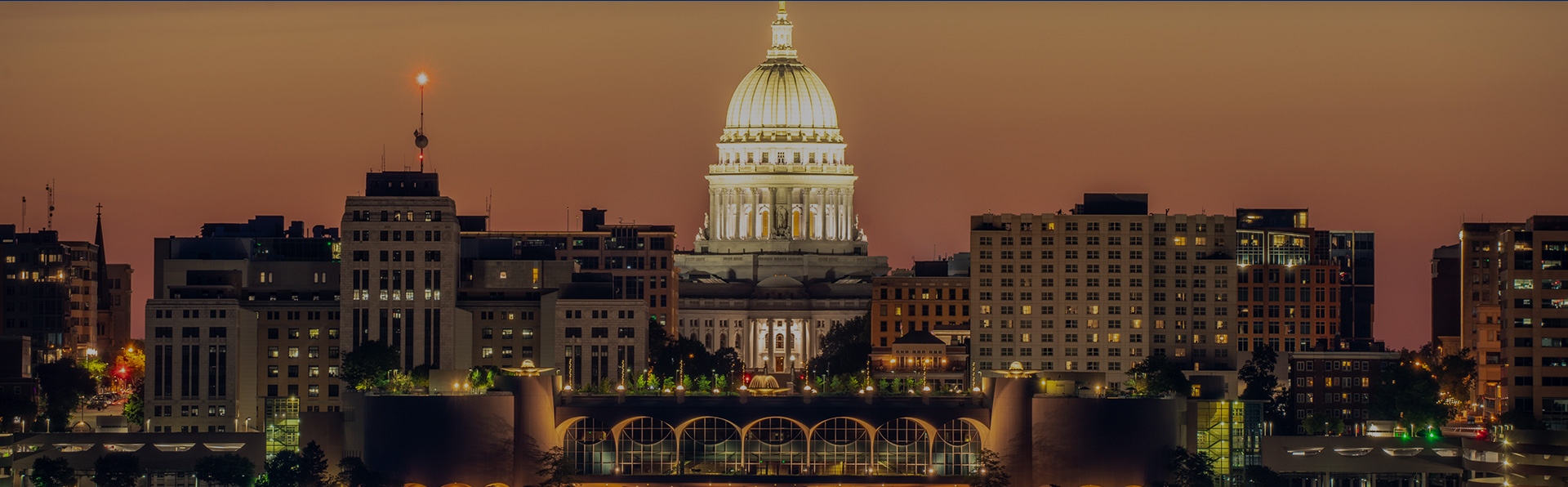
In the US, I had to start over again. My youngest sister invited me to join her in Madison, Wisconsin, which I did.

Career in Journalism
My stay in Madison was one of the most memorable, challenging and beautiful phases of my life. I was introduced to journalism and the communities of color when I was hired by the late Betty Franklin-Hammonds as assistant editor of The Madison Times Newspaper, a Black newspaper. Betty was president/CEO of the Urban League of Greater Madison, leader of the local NAACP, a social worker, and a community activist of the highest degree. While it was a brief working relationship because Betty died three months after taking me under her wings, it had a long lasting effect on me and those I became friends with, courtesy of my association with Betty.
A few years after Betty died, I decided to start my own Asian American publication, Asian Wisconzine, and the rest was history. It is still alive today, and I have the Lord to thank for, plus the many friends in the Madison community who helped me raise it from the ground, most especially: Jonathan Gramling, the late Paul Kusuda, Sharyl Kato, Mei-Feng Moe, Agnes Cammer, and Shree & Lakshmi Sridharan.

