
Madison Metropolitan School District Engagement Team: Providing Seamless Educational Support
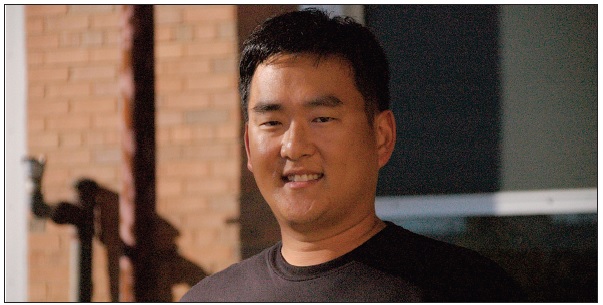
Adam Clausen began his career meeting the needs of Black and Brown East and La Follette High students as a volunteer for Life Church.
Fourth in a Series (Part 1 of 2)
By Jonathan Gramling
For Adam Clausen, student achievement has been about values and the humanity of all students. It wasn’t about the money or even the recognition. It was about meeting the needs of students, doing what he could to help students achieve in spite of what others believed about them or even what they believed about themselves.
Clausen led a youth mentorship program from 2006-2015 at Life Church on Femrite Drive working with students from East and La Follette High Schools who were disengaged from their schools and their education. And it has led to him being the director of the Department of Engagement, Diversity, Equity and Inclusion. It’s all about creating the right blend of supports as students progress, grow and develop during their k-12 years.
On the elementary level, the big addition is the Village Builders, community members who serve as a safe and warm adult within the confines of the school to help students adjust to whatever situations they are experiencing in the school on any given day. The Village Builders augment — and don’t replace — the existing efforts of the schools.
“We created the Village Builder position throughout the elementary schools in addition to our intentional expansion of the community school model with some family liaisons and community school resource coordinators,” Clausen said.
Starting with the secondary schools, Clausen saw the need to create career pathways in order to retain staff who have been effective with the students but lack the credentials to grow in their roles within the district.
“I wanted to create a position that really recognized the impact of staff of color,” Clausen emphasized. “It was a developmental position for them. I knew and have seen this bear out this fall that they would have a tremendous impact on students just because of the inherent cultural representation that they are bringing and their own stories and passion to pay it forward and invest in our youth because they were once those students. I knew the impact on students would be easy. I think what we have to navigate is how do we as a system, which has been so conditioned to use staff in a certain way and assess certain needs in our buildings, how do we retrain and recondition our secondary schools to recognize the impact that the staff of color can have when they don’t have the credentials. Can we create those spaces for them to still help educate our children? I think that is what we’ve been focusing on this fall.”
And while these staff were having a positive impact on the students, MMSD was creating pathways for them to earn the credentials they need.
“We are engaging with our potential higher education institution partners and investment in the staff as a cohort to help them get their credentials, help them get their degrees while in the meantime still creating opportunities for them to have a profound impact on the students and families,” Clausen said. “They are engaging the whole family and not just the students. They are going out into the community because many of these staff are from the community so they already have roots and connections and know these students’ families. They are able to enhance our family engagement efforts as well.”
The student engagement specialists are tied to school feeder patterns, the high schools and the middle schools that feed into them, in order to give support to the students who need it the most.
“We wanted them to have more relational continuity within the feeder pattern so that when those students who are being mentored by them in middle school will have a familiar face and space in the high schools once they get there,” Clausen said. “We’re also hoping that the connections with families at the middle school level to have those engagement efforts pay off once those students get to high school because they will already have a safe, trusted person who they know is going to advocate for their child and also hold their child accountable for their potential and program up to be who their parents and us believe that they are. There are two student engagement specialists per high school feeder pattern. We also have one who is serving Capitol and Shabazz. We’re excited for that. Each might have 2-3 middle schools.”
In many ways, the student engagement specialists are tied to the students —and the families — and not a particular school.
“They are doing mentorship of students,” Clausen said. “They work with administrators and student services teams to identify students whom they can offer a little bit more support for, advocate for in high school and middle schools. Some of this is related to social and emotional learning. Their work is related to restorative justice work, having some of those restorative conversations, continuing some of that identity work with students and helping them believe in themselves. We also are finalizing some of our plans for their transition support work. We really want them focusing on the eighth graders so that their transition to the high school is less overwhelming and hopefully it is a smoother process for students and families. Those plans are being finalized.”
The roles of the high school multicultural services coordinators have been modified as well in order to assist in the continuity of support as the students reach the high school level.
“We wanted them to also serve while we expanded their role to really serve all multicultural student clubs and also serve the feeder patterns,” Clausen said. “They are also supporting the feeder middle schools with some of their parenting engagement efforts. They work with the administrators on what that looks like. It could be events. It could be home visits and other more personal contacts and connections with parents. The MSCs have so much experience leading BSU and student club leadership experiences, we wanted our students in middle school to also have some of those experiences where they have connections with someone who is going to be cultivating that leadership in high school.”
The entirety of this effort represents a large growth in support staff from elementary school through high school.
“55 positions were created all together between the elementary, middle and high schools,” Clausen said. “The staff on the elementary level are supervised by the principals. And the people based in the middle and high schools are supervised by our office. We did that intentionally because we know the needs in the schools are very real. One of the challenges is every school does have unique needs and there are nuances. And so every administrator is trying their best to meet the needs as they have assessed them.”
To bring the children and families out of the COVID-19 pandemic era that severely impacted students and their growth, MMSD is putting its resources in places where the students who need it the most receive the support to be all that they can be. And it is an investment that can pay off for the Maddison community in years to come.